spoilers for both volumes
ok so i knew bits of kill bill before i watched it properly. the yellow suit, the whistle, that guitar riff people use when someone is about to make an entrance. they’re everywhere, so i knew the references without really knowing the film. then i watched it and realised: oh, this isn’t just where a few famous clips come from. the whole thing is iconic.
it’s a revenge story, basically. the Bride wakes up, gets a list of names and goes after them one by one. but the film keeps turning into a different kind of movie: samurai film, kung-fu movie, spaghetti western, anime, then a surprisingly quiet family story. Tarantino has talked about wanting its chapters to feel like different films, and you can feel that playful gear change as you watch. his BAFTA interview gets into how he thinks about those different genres.
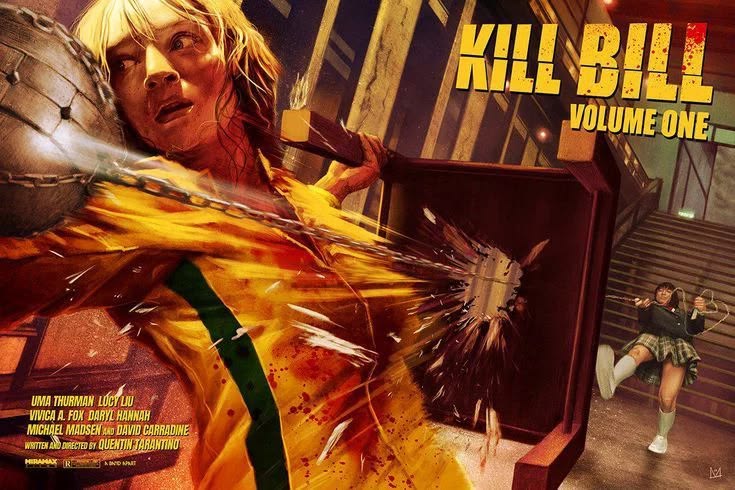
the images get there before the plot
the yellow suit, the sword, the black-and-white fight, the blood-red title card: you can recognise the film in half a second. seeing them in context made me realise how carefully they belong together. even when the movie is borrowing from other films, it has its own look. the suit is a nod to Bruce Lee’s famous one in Game of Death, but Uma Thurman makes it completely the Bride’s. American Cinematographer has a good piece about how the look came together.
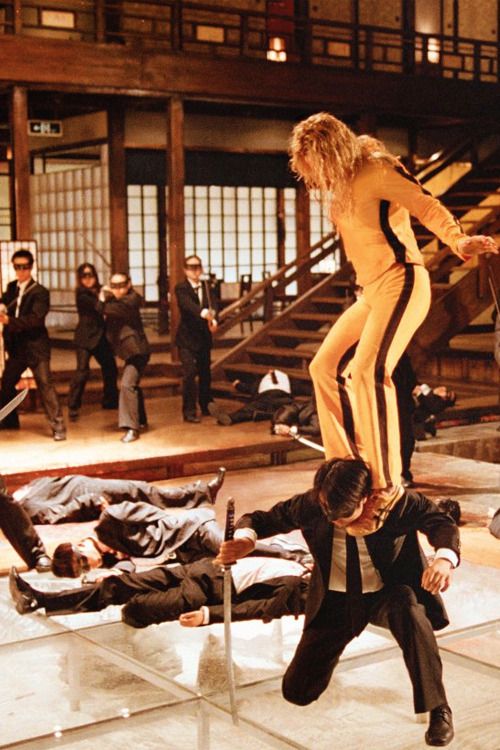
the House of Blue Leaves fight is the clearest example. at first it’s all warm wood and golden light, then the film flips into silhouettes and black and white. the room feels huge, the figures read like graphic shapes, and every change makes the action feel new. it’s not just “cool fight scene” after “cool fight scene” — the colours, framing and music keep changing the mood. and then the snow outside arrives like the film is showing off one more image you’ll remember forever.
wait, i know this sound
the sounds are just as recognisable as the pictures. “Bang Bang (My Baby Shot Me Down)” makes the opening feel sad before the revenge even starts. then there’s the little whistle, “Twisted Nerve” by Bernard Herrmann, which loads of people now know through the Chill Bill sample and meme edits. and Tomoyasu Hotei’s “Battle Without Honor or Humanity” has those stomping guitar notes that make any entrance feel absurdly important. Hotei’s own bio even points to its fame from Kill Bill, which says a lot about how far the film’s music travelled.
it isn’t only the songs, either. the sword swishes and clacks, the big thuds, the sudden quiet before a hit — the movie makes even a tiny sound feel like part of the choreography. in the House of Blue Leaves, the garage-rock tracks and the whistling cut through the fight in totally different ways. when you’ve heard these bits in memes first, it’s funny to meet them back in the scene they came from. they work online because they already tell you what mood is coming: suspense, confidence, chaos, or someone about to have a very bad day.
i think that’s what surprised me most. clips and memes make it easy to know a film in fragments. watching the whole thing, you see how the sounds, outfits and camera choices all fit into a bigger rhythm. it feels like an entire film built out of moments that somehow escaped into everyone’s memory.
the violence is fun until it isn’t
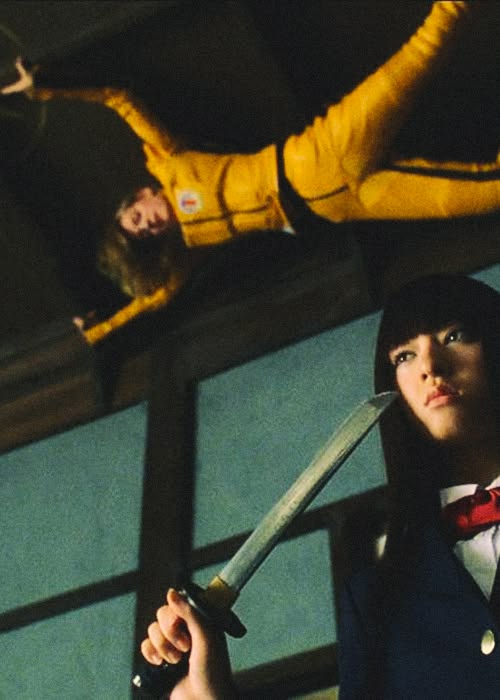
volume one is the loud, colourful half. the fights are huge and ridiculous, but you can still follow where everyone is and what each hit changes. the House of Blue Leaves fight is the showstopper; the black-and-white switch gives you a second to notice how much violence has been piling up. editor Sally Menke said the change had an artistic reason too, not just a practical one. her CineMontage interview is a nice reminder that editing shapes how the scene feels, not only whether the action is easy to follow.
then volume two slows right down. people sit with things, talk, and wait. Bill becomes more than a name at the end of the list, and the Bride starts to feel like a person again instead of an unstoppable action figure. after all that noise, a quiet conversation can feel more tense than a sword fight.
revenge gives her a direction when everything else has been taken away, but it can’t give her a normal life back. when she learns her daughter is alive, the story suddenly has somewhere else to go. it becomes less about finishing the list and more about what she might get to do once it’s finished.
ok, i get why it’s a classic
i didn’t realise how classic it was until i watched the whole thing and kept recognising its fingerprints everywhere. not just the obvious yellow tracksuit or whistle, but the way it can switch from funny to brutal to genuinely tender and still feel like one story. it has so many images and sounds people have kept borrowing, and somehow it still feels like its own strange little world.
under all the style, it’s about a person trying to get her life back. the Bride doesn’t come out magically fine; she comes out alive, with a chance to be somebody other than the person who was wronged. life after something awful doesn’t mean pretending it didn’t matter. sometimes it just means making a little room for something else as well.
so yeah, the sword fights are brilliant, the music is stuck in my head, and i finally understand why so many of these moments feel familiar. kill bill is a classic because the whole movie has the same force as its most famous clips — and then it gives those clips a heart.